
Heat treatments / Normalizing
Normalizing
Makes the structure of the material uniform and refines its grain, with more repeatable properties.
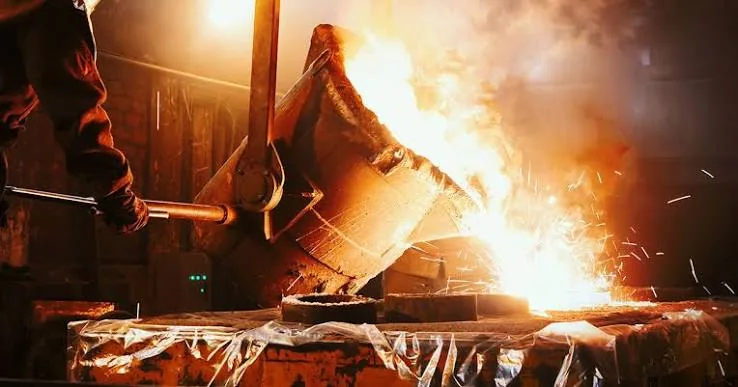
What normalizing is
In normalizing, the part is heated above the critical temperature of the steel, held for the necessary time and then cooled in air. The result is a more uniform, finer-grained structure, with more predictable properties throughout the part.
It is especially useful when the structure is irregular, as can happen after casting, forging, rolling or welding. It usually also reduces internal stresses and improves machinability.
Compared with annealing, cooling is faster, because it takes place in air rather than slowly in the furnace: the steel generally remains somewhat harder and stronger.
How it works
- 1
Heating
The part is raised above the critical temperature of the material.
- 2
Holding
The temperature is kept constant for the time needed to make the structure uniform.
- 3
Air cooling
The part cools in air: the structure re-forms with a finer grain.
When it is needed
- After forging, casting, rolling or welding, to make the structure uniform.
- Before later operations, to have a more homogeneous material.
- When the drawing or specification calls for a "normalized" condition.
Worth bearing in mind
The effect on strength depends on the alloy and the carbon content: in some cases it increases, in others it may decrease. Tell us the material and the result you need and we will assess the cycle together.
What we need for a quote: material or specification, size and weight, quantity, required values and drawing.
Frequently asked questions
What is the difference between normalizing and annealing?
Both heat the part, but in normalizing the cooling takes place in air, while in annealing it is slow. For this reason normalizing generally leaves the material somewhat harder and stronger.
Does normalizing always increase strength?
No, it depends on the alloy and the carbon content. Its main purpose is to obtain a uniform, fine-grained structure.
What information do you need for a quote?
Material or specification, size and weight of the parts, quantity, any required values and the drawing, if available.